

Ever stared up at a climbing wall and wondered if you could actually pull it off? I remember my first session—heart racing, hands slipping, but that one solid move made it all click. No elite fitness required; it’s about smart prep and steady steps. This guide focuses on what you truly need as a beginner, zeroing in on safety essentials to keep you secure from day one. Let’s get you equipped, moving, and mentally ready without the hype.
Why Rock Climbing?
Rock climbing builds focus and resilience, improve problem solving that sharpen your brain while strengthening your core. Regular sessions can lower anxiety by up to 30%, mixing cardio with mental challenges in a way few activities match. Modern apps now track your progress easily, turning raw effort into measurable wins over weeks.
It fits any schedule—short boulder bursts or longer routes for deeper escapes. The strength you gain carries over to daily tasks, like easier lifts or better balance. If you’re seeking a spark beyond routine workouts, this delivers real, lasting edge.
Scouting Your Starting Line: Gyms, Crags, or Guided Trips?
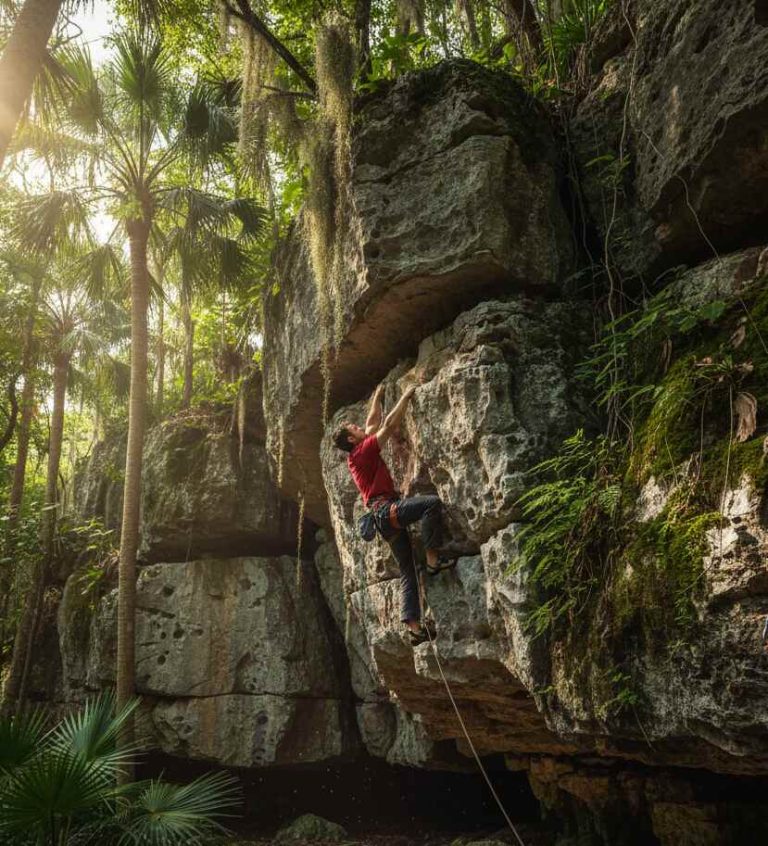
Start in a gym for padded floors and on-site instructors who enforce safety protocols from the jump. Entry is cheap, around $25, with quick classes covering basic spotting and fall zones. Outdoors demands guided outings first—book affordable trips that teach route reading and environmental rules on beginner-friendly spots.
Gyms replicate outdoor textures for skill transfer, but always confirm crash pads are in place. Use free apps to scout weather and access for any site. Link up with local climber groups early; shared vigilance boosts safety in numbers.
Gear Basics: Stocking Up Without Going Broke in 2025
A core kit runs $200-300, prioritizing certified items that meet international safety standards like UIAA ratings. Hunt sales for bundles that include harnesses and bags, always checking for wear before use. Opt for sustainable materials where possible—they hold up without environmental trade-offs.
Rent larger items like ropes at first to learn your fit and needs. Choose moisture-wicking clothes that allow full range without snags. Low-cost starts mean more time climbing, less on storage—focus here keeps risks minimal.
Climbing Shoes and Harnesses: Sizing for Comfort and Control
Down-turned shoes provide edge grip; size them half a size smaller than street shoes for secure footing, but test to avoid blisters or numbness. Velcro or lace options work for indoor-outdoor switches—ensure rubber soles smear well on smooth surfaces. Ill-fitting shoes lead to slips, so prioritize a snug yet tolerable break-in period.
A padded harness must fit snug at waist and legs to distribute weight evenly during hangs or falls. Adjustable straps prevent chafing; double-check buckles lock fully every session. These prevent common strains—get professionally fitted if unsure.

Belay Devices, Ropes, and Chalk: The Safety and Grip Trio
Tube-style belay devices control descents smoothly when paired with a locking carabiner—master the setup in a supervised class to avoid mishandles. Practice knots like the figure-eight until instinctive; they’re your primary safeguard for partners. Assisted-braking versions add an extra lock for beginners, but never skip hands-on training.
Dynamic ropes stretch on impact to absorb falls—aim for 9-10mm diameters rated for your weight. Chalk absorbs sweat for reliable holds; use liquid forms to minimize dust inhalation. Inspect everything pre-climb for frays or damage—this routine catches issues before they escalate.
Footwork Fundamentals: Where Newbies Trip Up First
Legs power most ascents, so learn to smear soles flat against rock for friction instead of always seeking ledges. Practice silent steps on low traverses to hone balance and reduce arm overuse. Hands-off warm-ups reinforce this—sloppy feet cause 70% of early fatigue and falls.
Open your hips and flag one leg out to counterbalance, avoiding sideways leans that pull you off-route. Anchor with high steps to stay aligned. Solid footwork cuts slip risks dramatically—drill it until it feels automatic.
Hand Placement and Body Dynamics: Power Through Precision
Grip edges with light crimps to protect fingers, switching to full-palm on rounded holds for stability. Keep arms straight during rests to scan ahead and conserve strength. Over-gripping tires you fast—relax into the flow at easier sections.
Position hips close to the wall, twisting your torso for efficient reaches without barn-dooring. Loose shoulders minimize momentum swings that unbalance you. These habits ensure controlled movement, slashing injury odds on tricky spots.
Off-the-Wall Training: Building Strength at Home
Build with bodyweight pulls and core planks, aiming for short sets to mimic climbing demands without overload. Start hangs at 7 seconds on wide holds, progressing slowly to avoid tendon strains. Schedule twice weekly with rest days—overtraining invites pulls.
Incorporate hip-opening stretches like lunges to maintain flexibility and prevent tweaks. Track efforts in a simple log to spot patterns. This foundation supports safe progression, bridging gaps between sessions.
Mindset Hacks: Taming the Fear Factor
View slips as feedback, not failures—breathe deeply to visualize clean sequences and steady nerves. Celebrate small placements over full tops to foster patience and reduce burnout. Trusted spotters amplify this; their cues build collective safety nets.
Journal post-climb what worked amid discomfort, turning tension into trusted instincts. Short breathing exercises quiet panic before cruxes. These tools transform hesitation into deliberate action, keeping you grounded on and off the wall.
Rock climbing demands respect for its risks, but with certified gear checks, precise techniques, and fear-facing habits, newbies thrive safely. Prioritize lessons on falls, inspections, and partner comms—they’re your non-negotiables. This setup equips you for confident starts in a sport that’s as forgiving as you prepare. Clip in soon; the holds won’t wait.



Start earning on autopilot—become our affiliate partner!