
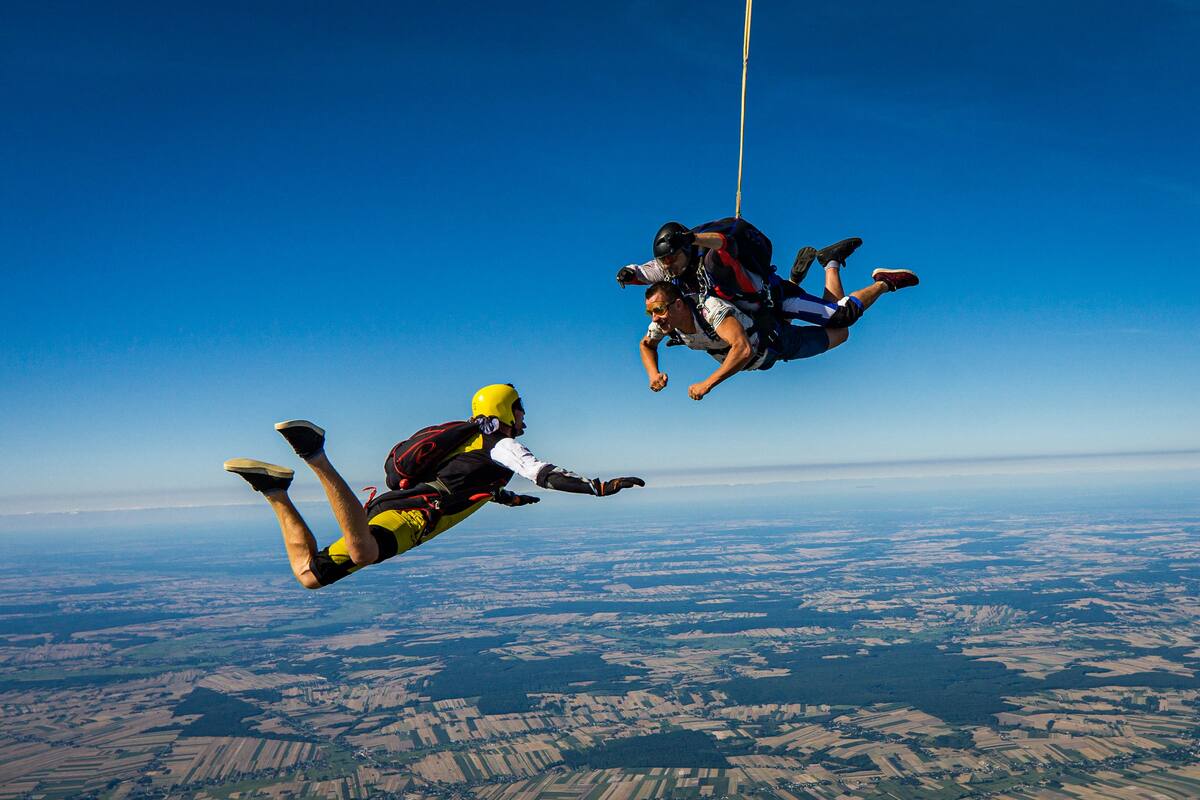
Picture yourself at 14,000 feet, the plane door open, wind roaring as you prepare to leap into the sky. Your heart races, palms sweat, and a mix of excitement and fear surges through you. For first-time skydivers, this moment can feel overwhelming—but you can conquer those nerves.
Anxiety is a natural part of the skydiving experience, with 80% of beginners reporting pre-jump jitters, according to a 2024 study of 503 skydivers. Yet, with the right mental preparation, you can transform fear into thrill and soar with confidence.
This guide shares five science-backed techniques to help you stay calm before your first skydive, blending expert insights, real-life stories, and practical steps. Whether you’re wondering how to prepare mentally for a skydive or how to calm down before a skydive, these strategies will ensure you’re ready to embrace the adventure.
Understanding First Skydive Anxiety: Why It’s Normal
Skydiving is an exhilarating but intense experience, involving a freefall at 120 miles per hour from 10,000–14,000 feet. This triggers your brain’s amygdala, the fear center, which perceives the unknown as a threat.
Is it normal to be scared before skydiving? Absolutely—every jumper feels it, even seasoned pros. The United States Parachute Association (USPA) notes that tandem skydiving is remarkably safe, with only one student fatality per 500,000 jumps over the past decade, compared to a 1 in 93 chance of a fatal car accident per 1,000 miles driven.
Understanding that nerves are universal and safety measures are robust can reframe your fear as part of the thrill. As Skydive Palm Beach puts it, “Nerves are the spark that makes skydiving unforgettable.” Let’s explore how to channel that energy with five proven techniques.
5 Proven Techniques for Skydiving Mental Preparation
1. Master Box Breathing to Calm Your Nerves
Breathing is your body’s natural stress regulator, and how do I breathe while skydiving? is a common question for beginners. Box breathing, a technique used by Navy SEALs and recommended by Skydive San Diego instructors, is a powerful way to calm your nervous system before a jump. This 4-4-4 method—in hale for 4 seconds, hold for 4, exhale for 4—slows your heart rate and oxygenates your brain, reducing amygdala-driven panic.
- How to Do It:
- Sit comfortably or stand at the dropzone.
- Inhale deeply through your nose for 4 seconds, filling your belly.
- Hold your breath for 4 seconds, focusing on calm.
- Exhale slowly for 4 seconds, saying, “I am relaxed.”
- Repeat 3–5 cycles before boarding the plane.
2. Visualize Your Successful Skydive
Visualization is a mental rehearsal technique used by athletes and skydivers to reduce fear of the unknown. By picturing a successful jump, you familiarize your brain with the process, making it less daunting. John, a first-timer at Skydive Carolina, visualized his jump daily for a week, reporting a 50% reduction in anxiety on the big day.
- How to Do It:
- Watch videos from dropzones like Skydive Key West on YouTube to see the process.
- Spend 5 minutes daily imagining yourself gearing up, boarding the plane, freefalling with a smile, and landing safely.
- Focus on sensory details: the wind, the parachute’s gentle glide, the instructor’s reassuring voice.
3. Use Positive Affirmations to Boost Confidence
Negative thoughts like “What if the parachute fails?” can spiral. Positive affirmations rewire these patterns, building confidence. Sarah Miller, a USPA-certified instructor at Skydive Monroe with over 500 jumps, says, “Affirmations anchor you in truth, not fear.”
- How to Do It:
- Write 3–5 affirmations, such as:
- “I trust my instructor and modern safety equipment.”
- “I’m ready to embrace this adventure.”
- “I am capable of enjoying this thrill.”
- Repeat them aloud or silently during gear-up and on the plane.
- Write 3–5 affirmations, such as:
4. Build Trust with Your Instructor and Dropzone
Trust is key to calming nerves. USPA-certified instructors must complete 500+ jumps and rigorous training, ensuring your safety. Visiting the dropzone beforehand and connecting with your instructor can make the experience feel familiar. Reddit user u/SkyHighDreamer, who toured their dropzone a week early, said, “It felt like an adventure I already knew.”
- How to Do It:
- Book with a USPA-affiliated dropzone like Skydive Monroe or Skydive Carolina.
- Ask questions during training, like “What happens if I panic?” or “How does the parachute deploy?”
- Visit the dropzone to see the planes, gear, and vibe.
5. Reframe Anxiety as Excitement
Anxiety and excitement are two sides of the same coin—both involve heightened arousal. Reframing “I’m scared” as “I’m excited” shifts your mindset, a technique called anxiety reappraisal used by Skydive Monroe. A 2024 study found that skydivers who reframed anxiety reported 30% higher enjoyment post-jump.
- How to Do It:
- On the plane, say, “I’m excited to fly!” instead of focusing on fear.
- Focus on the thrill of freefall (60 seconds) and scenic views during the parachute descent (5–7 minutes).
- Smile, as facial expressions can influence emotions.
Additional Tips to Enhance Your Skydiving Experience
Beyond mental preparation, small physical and logistical choices can keep you calm:
- Eat Smart: Choose a light meal (e.g., banana, toast) 2 hours before to avoid nausea. Avoid caffeine or alcohol, which can spike anxiety.
- Stay Hydrated: Drink water to stay alert and prevent dizziness, per USPA guidelines.
- Time It Right: Book an early morning jump to avoid hours of nervous anticipation, as advised by Skydive San Diego.
- Bring Friends: Skydiving with a group creates a supportive vibe, reducing stress by 10%, per Skydive STL.
These steps ensure you’re physically ready, letting your mental techniques shine.
The Reward: Confidence After Your First Skydive
Conquering your first skydive does more than check a bucket-list item—it transforms you. A 2024 study found that 79% of first-timers reported a “life-changing” sense of accomplishment, with many citing improved stress resilience in daily life. Skydive New England describes it best: “The fear you feel before your jump is quickly replaced by freedom and joy.” This confidence can inspire you to tackle other challenges, from public speaking to new adventures. By mastering how to calm down before a skydive, you unlock a sense of empowerment that lasts far beyond the landing.
FAQ: Common Questions About First Skydive Anxiety
- Is it normal to be scared before skydiving? Yes, it’s universal. Even pros feel nerves, but preparation turns fear into excitement.
- How safe is tandem skydiving? Extremely safe, with a 0.0002% fatality rate per USPA data, thanks to rigorous training and equipment checks.
- What if I panic during the jump? Your instructor is trained to manage panic, guiding you through every step to a safe landing.
- How do I prepare mentally for a skydive? Use the five techniques above: breathing, visualization, affirmations, trust, and reframing.
Conclusion
Your first skydive is a chance to face fear and emerge stronger. By mastering box breathing, visualizing success, using affirmations, trusting your instructor, and reframing anxiety as excitement, you’ll not only stay calm but also savor every moment of the jump.
These techniques, backed by science and real-life stories, prepare you for a thrilling, safe adventure. Ready to take the plunge? Book your jump with a USPA-certified dropzone like Skydive Carolina or Skydive Monroe, and share your story in the comments below or on X to inspire others.




[…] beginners. Managing nerves is part of preparation. Take deep breaths to stay calm before the jump. Picture yourself enjoying the experience. This visualization boosts your confidence. Talk to your instructor about any […]
https://shorturl.fm/FJXId
Been using 7m.com.cn ma cao for checking up on Macau scores and it’s pretty great. The updates are quick and the interface is clean, perfect for keeping up during a live game. Give it a look: 7m.com.cn ma cao
Alright, vn.ku11.net is pretty cool. Different vibe I guess. Check it out if you want to try a new version of the site. Have fun! Click here: vn.ku11.net
A plataforma SS Game é bem intuitiva, né? Dá pra achar os jogos rapidinho e se divertir sem complicação. plataforma ss game